

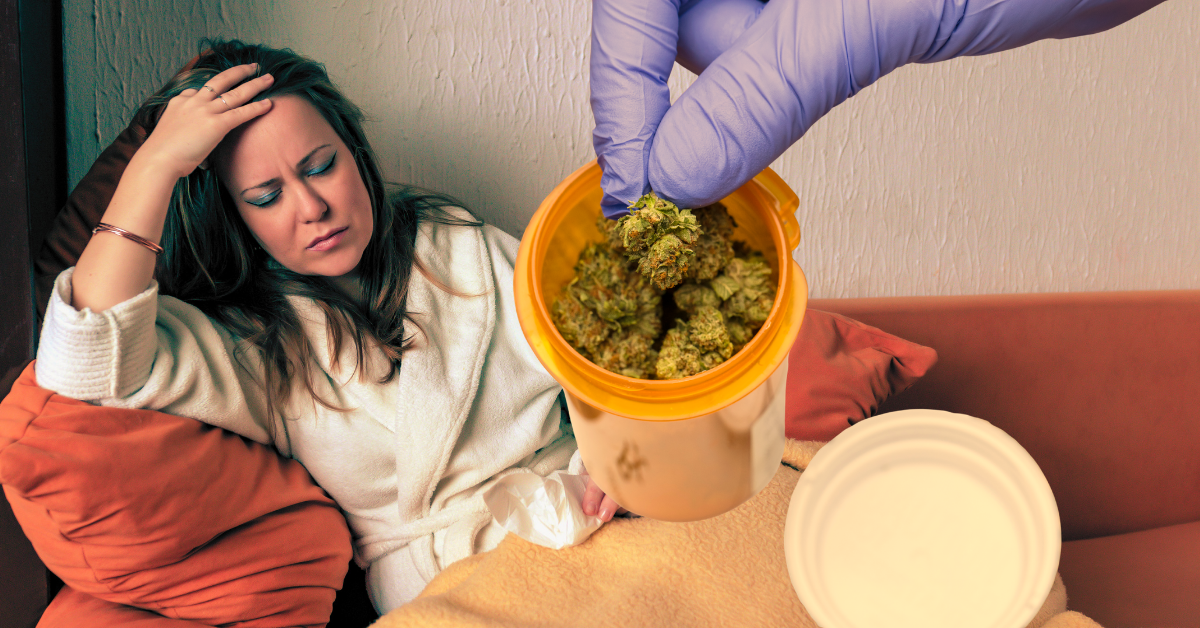
One of my favorite “cannabis myths” that I’ve enjoyed debunking repeatedly over the years is the “lazy stoner” stereotype. You know what I’m talking about – the expectation of someone rolling in ten minutes late, wreaking of weed smoke, eyes red as hell, headed straight for the food they left in the employee fridge the night before. Sure, this happens sometimes. But it’s by far not the norm. The latest data backing this up is a study which found cannabis consumers take less sick days compared to their non-cannabis using colleagues.
University of Georgia researchers Eklou R. Amendah, Patryk Babiarz, and Kavitha Rabindran conducted the study and published their findings in the Journal of Workplace Behavioral Health and analyzed data collected from over 20 million people through the U.S. Census Bureau and the U.S. Bureau of Labor Statistics between 1990 (pre-legalization) through 2025.
If there’s one thing that employers should take into consideration from their data – the bit that debunks the lazy stoner stereotype – is that health related workplace absences fell roughly 7% where medical marijuana was either legalized or decriminalized. Yes, you read that right – workplace absences dropped, meaning people called out of work less, in places that have medical cannabis access.
What the UGA Study on Medical Cannabis and Workplace Absenteeism Teaches Us About Cannabis Use in the Workplace
Though it might seem obvious to those of us in the cannabis space, the more physically demanding the occupation or industry, the more likely that medical cannabis access correlates with a decrease in sick days. Specifically, fabricators, assemblers, and other manual laborers saw the biggest difference with a 39% decrease in sick days, closely followed by industrial machine operators who saw a 33% decrease in health-related sick days after legalization.
Other industries that saw a noticeable drop in health-related sick days included:
- Healthcare, dental, and nurses at 32%
- Farmworkers at 18%
- Social workers, librarians, urban planners at 16%
- Lawyers with a decrease of 15%
- Food preparation workers at 10%
- Construction workers also at 10%
- Computer scientists at 9%
- Management level jobs saw a drop of 9%
- Sales occupations even dropped 7%
What I find most interesting here is that this study spans from pre-legalization (CA was first to legalize medical in 96) starting in 1990, goes through 35-years of data, and accounts for when laws changed.
Researchers looked both at medical and recreational legalization laws as well as ones that simply decriminalized medical cannabis and found that this decrease directly correlated with a noticeable drop in health-related absenteeism, especially in physically demanding jobs. Considering the most common reason that doctors recommend medical cannabis to their patients is for chronic pain – which is prevalent among workers within the industries that saw the biggest drops in health-related sick days.
Recreational Legalization Didn’t Move the Needle — And That’s the Real Point Here
Most interesting to me was that recreational access didn’t make a difference one way or the other – which directly debunks the lazy stoner stereotype. When it comes down to it, the fact that there was no change at all after recreational legalization is in place suggests that cannabis use doesn’t mean someone is more likely to miss work. It doesn’t however, mean they’re necessarily more likely to have a perfect attendance record – though some of us do.
What it does mean though is when medical cannabis access is legal people call out of work less. Whether this is a direct effect of legalization can’t be said for certain, there are plenty of other factors that could’ve contributed to that same decrease in sick days. Like a rapidly declining economy where the idea of calling in sick and losing a day of pay has become a luxury. This is especially true in more physically demanding lower wage occupations.
It’s also worth noting that a specific subset of workers – those without a high school education – saw the largest drop in health-related call outs at 36%. However, it’s not as surprising as one might think when you consider that those without a diploma are more likely to work factories, machine operators, restaurants, etc.
Why Cannabis May Be Keeping People at Work, Not Away From It
Look at the most common reasons for health-related absenteeism beyond your common cold or unexpected injury: a symptom flare up in workers who have chronic pain or manage debilitating conditions like cancer, HIV, MS, epilepsy, and more.
Now consider the most common things that medical marijuana is known to treat: chronic pain, cancer, HIV, MS, epilepsy, and more… Wait – those lists seem kinda similar, don’t they?
Again, we can’t definitively say that access to medical marijuana leads to less sick days, we can absolutely say that there’s a significant correlation that shouldn’t be ignored.
“Work absenteeism costs a lot for employers, with one estimate putting that total at $225 billion annually in lost productivity alone,” said Patryk Babiarz, associate professor in the UGA College of Family and Consumer Sciences. “Medical marijuana could actually save hundreds of millions of dollars in economic cost simply because people are not missing work.”
So, what does all this mean for job seekers, workers, and employers? That’s hard to say, but only because there’s a lot of things this study just doesn’t account for that could also be influential factors. There’s nothing that takes things like length of sick-leave, workplace drug testing policies, or what health reasons were behind absences.
How to Prove to People Cannabis Use Doesn’t Mean You’re an Unreliable Employee
While other studies show the potential negative side of legalization – with some finding that cannabis use disorder (CUD) is associated with workplace absenteeism, that doesn’t mean everyone who uses cannabis is going to flake on you.
The data presented in this study found that recreational cannabis legalization didn’t lead to any significant change in workplace absences – so while the data about CUD might be accurate as well, it’s not a more frequent occurrence after legalization and doesn’t represent the majority of cannabis consumers.
Anyone who falls into this category would fall into it whether access was legal or not.
So, if the situation arises, point to this article – show the statistics, because data doesn’t lie.
And the data says that a decrease in health-related sick days of roughly 7% across all industries after states legalized or decriminalized medical cannabis.
Medical marijuana access is undeniably a contributing factor in large drops in sick days – especially among those with physically demanding, low paying, and/or high stress jobs. An over 30% drop in health-related sick days in some industries, when absenteeism costs employers thousands, is something employers should keep in mind when hiring; especially when drug screenings for THC might come back positive on an otherwise perfect candidate.
—–
Wanna get more news stories like this one?! You can help us at All Things Cannabis accomplish our mission of educating the masses while advocating for safe medical access and a fairly regulated adult use industry – just visit ko-fi.com/allthingscanna to learn how!






Leave a Reply